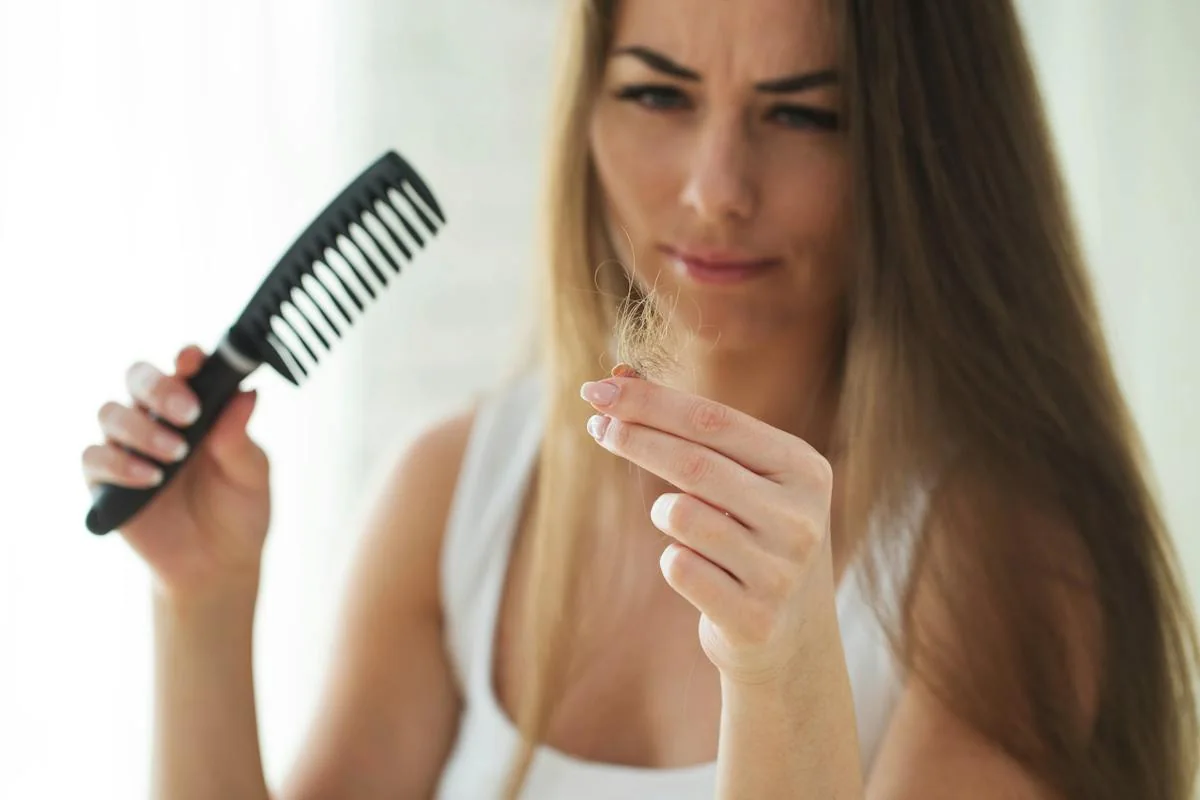
A clump in the shower can look dramatic without revealing why it happened. Washing may collect hairs that have already detached, while a slowly widening part may be more noticeable in photographs than in the drain. Understanding hair shedding vs hair loss begins with the pattern, timing, and condition of the scalp.
Both can deserve assessment. The distinction is useful because temporary increased shedding, inherited thinning, inflammation, and patchy loss may need different care rather than the same supplement or shampoo.
Understand the growth cycle before counting hairs
Increased shedding can occur when more hairs enter a resting phase after a trigger such as illness, childbirth, major stress, or significant weight change. The visible change may appear months later, which makes the connection less obvious without a timeline.
Hair follicles move through growth and resting phases, so some shedding is normal.
The hair growth cycle means the event causing concern today may relate to something that happened earlier. A recent shampoo change may be blamed simply because it is easier to remember.
Telogen effluvium is a term for increased shedding related to this shift in the cycle. It is not the explanation for every case, and a person may have another type of loss at the same time.
Avoid trying to establish a diagnosis by counting every hair. Washing frequency, brushing, hair length, and styling can change how much you notice on a particular day.
Look at distribution and scalp symptoms
Diffuse shedding, a widening part, a receding hairline, and smooth bald patches suggest different patterns that a clinician can assess. A visible pattern is a clue rather than proof, and more than one cause can contribute to hair thinning in the same person.
Scalp redness, scale, pain, itching, or scarring adds important details.
Hair thinning that develops gradually may be easier to track with photographs taken under similar lighting and with a similar hairstyle. Daily comparisons under changing conditions can be misleading.
Scalp symptoms deserve attention, especially pain, inflammation, or areas that look scarred. Some conditions can cause permanent damage if treatment is delayed.
Tight hairstyles can also contribute to traction related loss. If a style causes pain or pulls repeatedly at the same area, reduce the tension and ask for advice if thinning has developed.
Build a timeline instead of buying a cure
A history includes recent illness, surgery, childbirth, weight change, restrictive eating, medicines, supplements, and family patterns of hair loss. Bring details of when shedding started and whether it is improving. A clinician can decide whether examination, blood tests, or another investigation is needed based on the findings.
Do not stop prescribed medicines independently.
A dermatology visit is especially useful when the cause is unclear, loss is progressing, or the scalp is symptomatic. You do not need to try every retail product first.
Mention dietary changes and whether you have had symptoms of anemia, thyroid disease, or another condition. Testing should answer a clinical question rather than provide a large panel without a plan.
Tell the doctor about high dose vitamins, including biotin. Supplements can affect some laboratory tests, so the care team needs to know what you use before testing.
Choose treatment matched to the diagnosis
Treatment depends on the cause. Supplements are not a substitute for diagnosing a deficiency, and excessive amounts of certain nutrients can cause harm. Ask what improvement to expect, how long it may take, and how the response will be reviewed.
Some shedding improves as the trigger resolves, while inherited or inflammatory hair loss may need therapy.
A shampoo can clean the scalp and help some scalp conditions. But it cannot reliably reverse every type of hair loss. Marketing terms such as strengthening may describe the hair shaft rather than new follicle growth.
Medicines used for hair loss have indications, precautions, and different levels of evidence. Pregnancy possibility, other conditions, and the actual diagnosis can affect suitability.
Do not start several treatments at once without guidance. If irritation or improvement follows, it becomes difficult to know which product caused it, and needless costs can accumulate while the underlying problem remains unclear.
Protect hair gently while waiting for answers
Gentle handling can reduce breakage and avoid adding traction or heat damage while the cause is assessed. Breakage is not the same as shedding from the root, so describe short broken hairs as well as full length hairs when discussing the problem.
Use a comfortable hairstyle, avoid painful pulling, and limit harsh processing when hair is fragile.
Eat regularly and avoid severe restriction in an attempt to improve health or change weight quickly. Adequate nutrition supports normal growth. But no single food guarantees thicker hair.
Seek prompt care for sudden patchy loss, marked scalp inflammation, pain, or rapidly progressive thinning. Persistent shedding also deserves review, especially when accompanied by other symptoms.
The aim is a clear explanation and a realistic plan. Hair changes can be emotionally difficult, and that distress deserves respect. Accurate assessment is more useful than being told to stop worrying or to buy another bottle with an impressive label.
Frequently Asked Questions
The amount of hair in a brush does not establish a diagnosis. Pattern, timing, scalp findings, and health history provide more information. These answers address common concerns while emphasizing the value of assessment when loss is persistent, progressive, patchy, or associated with symptoms.
Treatment should follow the cause rather than a seasonal assumption.
Can shedding start months after an illness?
Yes, increased shedding can appear after a delay because of the hair cycle. A doctor can assess whether that pattern fits your case.
Should everyone with shedding take biotin?
No, routine high dose supplementation is not a universal treatment and can interfere with some tests. Discuss supplements and possible deficiencies with a doctor.
Is seasonal shedding always harmless?
A seasonal explanation should not override persistent, patchy, painful, or progressive changes. Seek assessment if the pattern is concerning or does not improve.
Updated