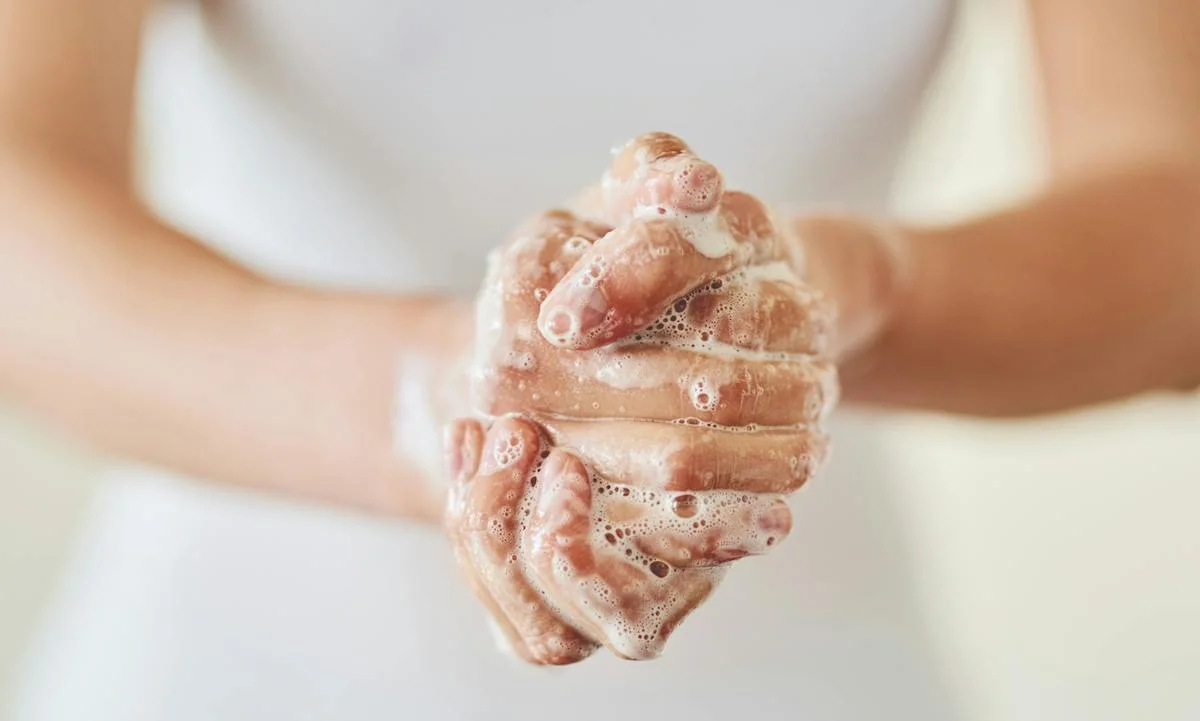
Water can leave your hands feeling drier than they were before washing. Repeated contact with soap, water, cleaning products, and friction can damage the skin's protective barrier. Dry hands from frequent washing call for better skin care alongside effective hygiene, not a choice between clean hands and comfortable ones.
Simple changes may help mild dryness, while persistent itching, cracks, or blisters can indicate hand eczema or another condition. The pattern and the products touching your skin are useful clues.
Understand how the barrier becomes irritated
The outer skin barrier helps limit water loss and protect against irritants. Frequent wet work, harsh products, and friction can disrupt it, leaving hands dry, rough, itchy, or cracked. Dryness can progress to dermatitis, but similar symptoms may involve allergy or another skin problem.
Persistent or severe changes deserve an assessment.
Hand dermatitis can affect work, cooking, sleep, and usual tasks. A small split near a fingertip can be surprisingly painful, even when the rash looks minor to someone else.
Notice whether symptoms improve away from work or return after a specific task. That pattern may suggest repeated exposure rather than a mysterious failure of every moisturizer.
Do not assume the most recent product is the only cause. Soap, gloves, detergents, metals, and personal care products may contribute in different ways, and several exposures can occur across the same day.
Keep necessary washing gentle and effective
Continue appropriate hand hygiene, using soap and water when needed and following public health advice. Choose a gentle cleanser where possible, use comfortable lukewarm water, rinse well, and dry carefully rather than scrubbing. Hot water does not make routine handwashing more effective and can worsen irritation.
Skin care should support hygiene rather than replace it.
Hand hygiene remains important before food preparation, after using the toilet, and in other situations where washing is recommended. Do not shorten essential cleaning simply because the skin feels dry.
Pat the hands dry with a clean towel, paying attention between fingers. Rings can trap moisture or irritants, so consider removing them during wet tasks when safe and practical.
If sanitizer is appropriate for the situation, follow instructions and let it dry. A product that stings damaged skin may reveal existing irritation. But persistent discomfort should prompt review of the overall routine and product choice.
Apply moisturizer where the habit already happens
A fragrance free cream or ointment used after washing and whenever skin feels dry can help protect the barrier. Keep it by a sink or in a pocket to make use easier. Richer products may suit nighttime use, while a less greasy option may suit work or daytime tasks.
A fragrance free cream is usually a better starting point than a strongly scented lotion for irritated skin. Unscented does not always mean fragrance free, so read the label.
Apply after gently drying, while the skin still has some moisture. You do not need a thick visible coating during every task if it makes your grip unsafe or conflicts with workplace requirements.
For skin cracks, a simple ointment may reduce dryness. But deep, painful, bleeding, or infected areas need advice. Avoid adding several active ingredients at once when the skin is already inflamed.
Protect hands from wet work and irritants
Protective gloves can reduce exposure during cleaning, dishwashing, and other irritating tasks, but the material and fit matter. Sweat trapped inside gloves can worsen symptoms, and some people react to glove ingredients. Use suitable gloves for the task, change wet liners, and allow hands to dry.
Follow workplace safety requirements when chemicals or infection risks are involved.
Protective gloves are not interchangeable. A thin disposable glove may not provide adequate chemical protection, while a heavy cleaning glove may be unsuitable for another task.
Cotton liners may help with comfort under appropriate gloves, provided they do not compromise the protection required. Replace them when damp.
If your job involves repeated wet work, discuss adjustments with occupational health or a supervisor. Skin care should not depend entirely on trying harder to moisturize while the same avoidable exposure continues all day.
Seek help when dryness becomes a recurring rash
Persistent redness, itching, blisters, painful fissures, or symptoms that interfere with work deserve medical assessment. A clinician may consider eczema, allergy, infection, or another cause and prescribe suitable treatment. Increasing pain, warmth, swelling, spreading redness, pus, or fever may indicate infection and should prompt care rather than another moisturizer trial.
Patch testing may be useful when contact allergy is suspected. It is different from simply trying products at home and can help identify ingredients that need avoidance.
If a topical medicine is prescribed, ask where to apply it, how long to use it, and how to continue barrier care. More frequent or longer use is not always better.
Comfortable hands support everyday life. A workable plan combines needed hygiene, a moisturizer you will use, exposure protection, and treatment when needed, instead of leaving you to cycle through creams without addressing the cause.
Frequently Asked Questions
Dryness after washing is common, but persistent hand rash can have several causes. Seek advice when cracks, blisters, pain, or work related exposure complicates the picture, and get earlier care for signs of infection rather than treating every change as dryness.
These answers focus on keeping hygiene effective while protecting the skin.
Should I stop washing my hands?
No, keep appropriate hygiene and make the routine gentler. Moisturize afterward and reduce needless exposure to harsh products.
Is scented lotion suitable for irritated hands?
Fragrance can aggravate sensitive skin. A fragrance free cream or ointment is often a more suitable starting point.
Why do gloves sometimes make symptoms worse?
Sweat, trapped moisture, or reactions to glove materials can contribute. Review the type, fit, and use with a professional when symptoms persist.
Explore more in Skin & Personal Care.
Updated