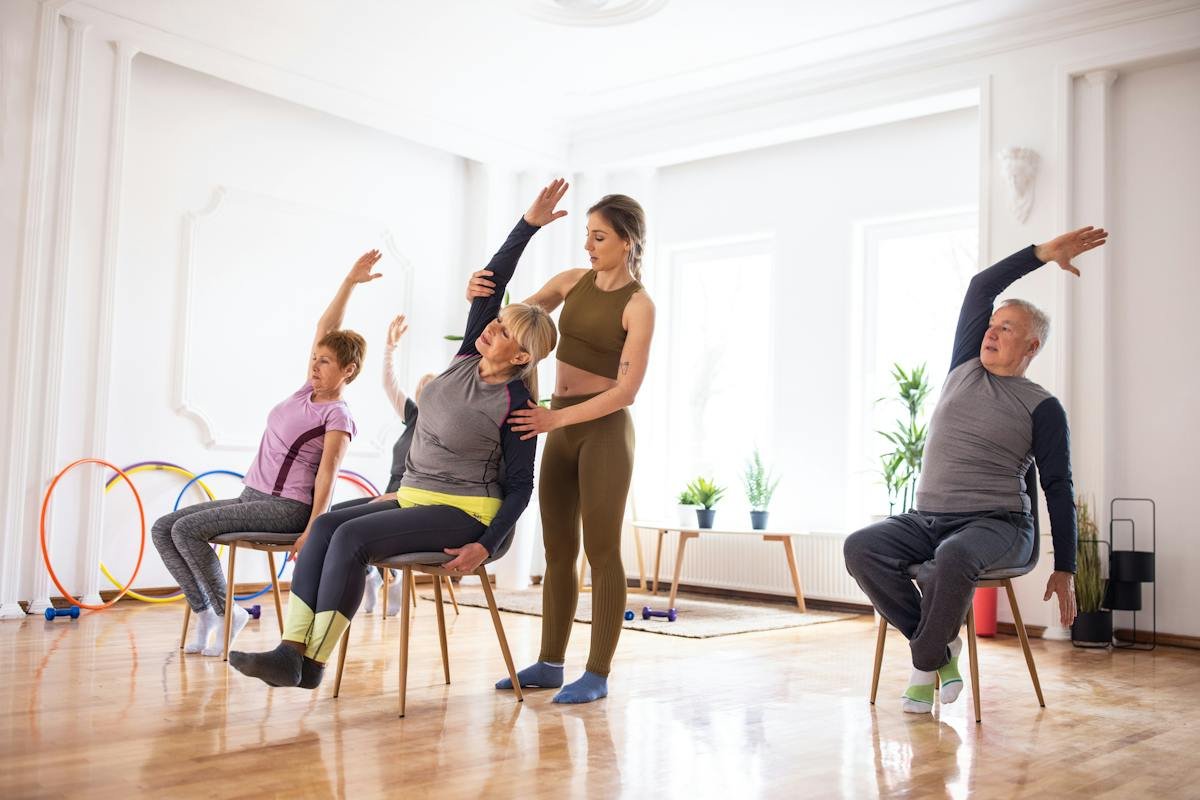
The curb looks a little higher than it used to, and a dark hallway makes you slow down. Balance is not only about standing on one foot. Balance exercises for older adults can build confidence, but a safer plan also looks at strength, vision, medicines, and the space you move through each day.
Begin Where Support Is Close
Start in a clear space with stable support, such as a sturdy counter. Avoid sliding chairs and weak rails. Wear suitable shoes and do not rush.
Ask for supervision if you feel unsteady, have fallen, or are unsure which movements are safe for your own health and ability today.
Start with the goal of moving calmly, not removing support as fast as possible. A hand on a counter can make practice more manageable. Do not copy a difficult pose just because someone calls it a beginner exercise.
If dizziness is part of the problem, mention it before starting. It can have causes that need check. A balance challenge should not become a way to test how close you can get to falling without help.
Combine Balance Practice With Useful Strength
Leg strength helps with rising and stepping, while balance practice trains control. A useful plan may include both, adapted to your needs. A physical therapist can select safe starting moves.
Ask how to progress without suddenly removing support or making the exercise much harder than you can manage comfortably.
A sturdy chair can be useful for guided sit-to-stand practice if that movement is safe for you. The height and amount of hand support may need to change. Good instruction matters more than copying a fixed repetition count.
Build practice into a time when you feel alert and have enough space. Do not squeeze it into a rushed moment beside a hot stove. The setting is part of the exercise, not an afterthought.
Look Around the Home as Well
Clear floors, good lighting, and safe routes help prevent falls at home. Check loose rugs, cords, stairs, and the path from bed to bathroom. Use properly installed supports where needed.
Do not rely on furniture that could move or tip when you reach for help during an loss of balance.
Walk through the home at the time you find it hardest to see. A route that looks clear at noon may be dim at night. Keep a light or other safe lighting option within reach of the bed.
Ask for help with home safety changes that are hard to do alone. A relative, occupational therapist, or community service may offer useful support. A safer room supports fall prevention and can help immediately while exercise works on longer-term confidence and ability.
Report Falls and Near Misses
Discuss falls and near misses even when there is no major injury. Mention fear, dizziness, or changes in walking. Medicines, vision, footwear, health conditions, and mobility aids may need review.
A useful plan goes beyond telling you to be careful or asking you to train harder without checking the cause.
After a head injury, severe pain, inability to bear weight, or other worrying symptoms, seek prompt care. Do not assume that being able to stand means no injury occurred. Follow advice specific to your situation.
Keep the goal tied to daily life: reaching the mailbox, visiting a friend, or moving around home with less fear. Confidence grows best from support and useful progress, not from being pushed into a challenge that feels unsafe.
Frequently Asked Questions
Balance depends on the body, the task, and the setting. Safe practice and home changes can work together, while new symptoms need a check. These answers cover common concerns.
Every person does not need the same exercise or pace of progress to build useful confidence and safer movement each day.
Should I practice with my eyes closed?
Not without suitable guidance and support. Removing vision makes balance harder and may increase the risk of falling.
Is fear of falling worth mentioning?
Yes, it can limit activity and affect confidence. A professional can help build a plan that feels safe rather than telling you simply to ignore the fear.
Do I need to report a fall without injury?
Yes, it can reveal a problem worth addressing before another fall occurs. Describe where it happened, what you were doing, and any symptoms around the event.