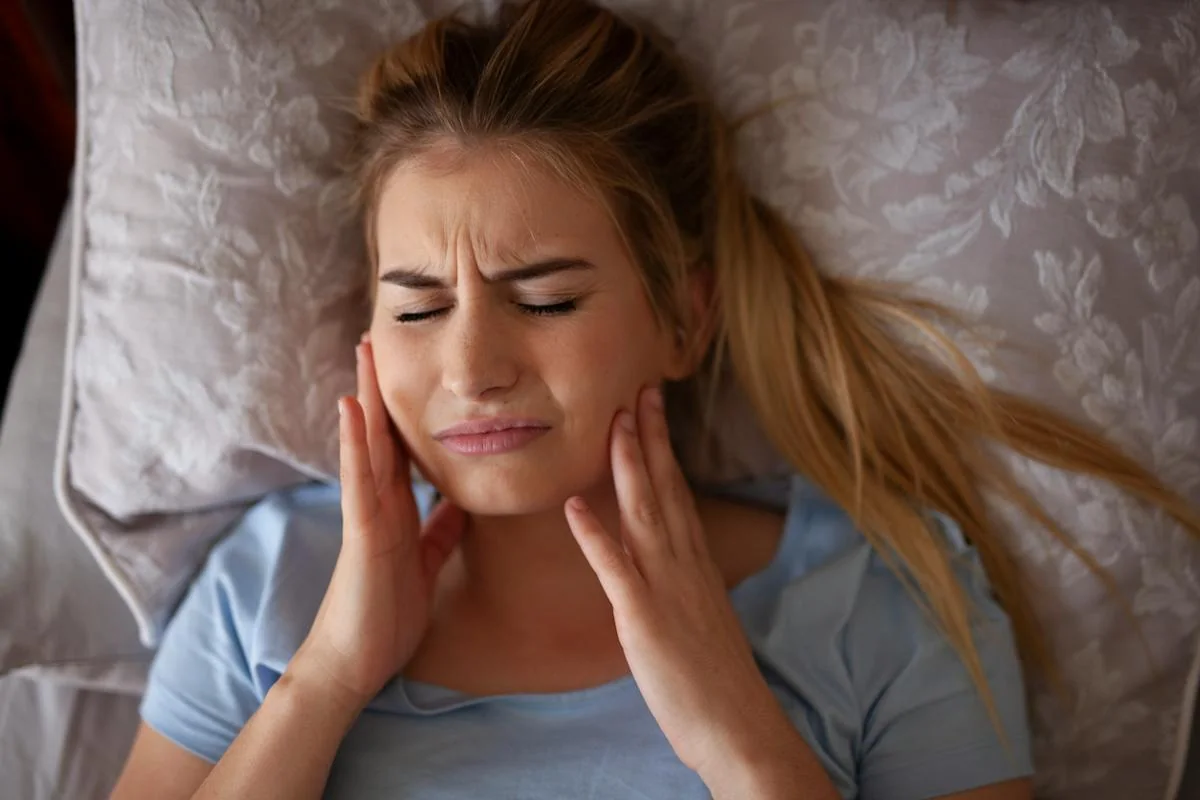
Your jaw feels as if it has already finished a workday before breakfast. A partner may hear grinding, or a dentist may notice worn teeth long before you notice a sound. Teeth grinding at night can occur without your awareness, and a sore jaw is a clue worth discussing rather than a diagnosis by itself.
The aim is to protect teeth, understand possible contributors, and reduce symptoms. A mouthguard may be part of that plan. But it does not explain every cause of jaw pain.
Recognize grinding and clenching as related behaviors
Bruxism involves grinding or clenching the teeth and can occur during sleep or while awake. Some people have no symptoms, while others notice jaw soreness, headaches, sensitivity, or tooth damage. A dental examination helps assess the pattern and rule out other causes.
The sound of grinding is not required for clenching to occur.
Sleep bruxism may be reported by someone sharing the room. Daytime clenching can happen while concentrating, driving, or responding to stress, often without an obvious moment when you choose to do it.
Notice whether your teeth are pressed together during usual waking tasks. A relaxed resting jaw does not need to hold the teeth in contact continuously.
Avoid repeatedly testing your bite or moving the jaw to see whether it still hurts. That can add strain and may make a mild problem feel more persistent.
Let a dental assessment check the damage
A dentist can examine tooth wear, cracks, sensitivity, chewing muscles, and jaw movement. Worn teeth do not always prove current nighttime grinding, because wear has several possible causes and may reflect earlier activity. Describe symptoms, timing, and any partner observations so the assessment considers more than tooth appearance.
Mention a new filling that feels high, recent dental treatment, or pain in a particular tooth. These details may point to a problem that needs specific attention.
Tooth wear can also be influenced by acidic foods, reflux, and other factors. The treatment depends on what is contributing, not simply on whether a tooth looks flattened.
If your jaw locks, you cannot open normally, or pain is severe, seek prompt dental or medical advice. Facial swelling, fever, or difficulty swallowing can signal a more urgent problem and should not be managed as routine clenching.
Understand what a night guard can and cannot do
A fitted night guard may protect teeth from damage, but it does not necessarily stop the underlying grinding activity. Ask a dentist before relying on an over the counter device, especially if you have jaw pain, bite changes, or symptoms suggesting a sleep breathing disorder.
Suitability, fit, and follow up matter.
A night guard should be checked if it causes new pain, feels unstable, or changes how your teeth meet. Keep it clean and follow instructions for storage and replacement.
Do not reshape a device repeatedly or continue using one that makes symptoms worse. A poor fit can create a new problem while failing to address the old one.
A guard intended to protect teeth is not always a treatment for sleep apnea. Tell your dentist about snoring, gasping, or daytime sleepiness so those clues can be evaluated separately when appropriate.
Review habits and possible contributors
Stress, some medicines, alcohol, caffeine, and other sleep problems may be relevant to bruxism, though the causes differ between people. Review the timing of symptoms and recent changes with your clinician or dentist. Daytime awareness and reducing unnecessary jaw strain may help manage discomfort.
Do not stop prescribed medication on your own.
Try a gentle reminder during desk work to let the jaw rest. Avoid prolonged gum chewing if it worsens symptoms, and choose foods that are comfortable to chew during a painful period.
Comfort measures should be modest. Forceful massage, aggressive stretching, or repeated jaw exercises from an unverified video can aggravate jaw pain.
If emotional strain seems involved, consider practical stress support as one part of the plan. It is not proof that pain is imaginary, and it does not remove the need to examine teeth, joints, or other possible sources.
Follow changes rather than chasing a single cure
A useful plan tracks pain, chewing comfort, tooth sensitivity, and damage over time. Follow up if symptoms persist or worsen, and ask how your device or treatment will be reviewed. New breathing symptoms, major daytime sleepiness, or unusual nighttime movements may require additional assessment rather than simply replacing a mouthguard.
Bring a list of medicines and supplements to the appointment. Explain whether symptoms began after a dose change, a period of poor sleep, or a new habit, while keeping an open mind about the cause.
Ask what improvement should look like and when to return if it does not happen. A specific plan prevents weeks of trying harder to relax while a damaged tooth remains untreated.
Protecting your mouth is a practical goal. It does not require blaming yourself for a behavior that often happens outside awareness, and it works best when care considers both the teeth and the wider pattern.
Frequently Asked Questions
Grinding, clenching, tooth wear, and jaw pain overlap, but they are not identical. These answers explain why a dental assessment matters and why a device should be part of a plan rather than an automatic purchase. Seek prompt care for severe pain, swelling, a locked jaw, or significant functional changes.
Can I grind without making noise?
Clenching can happen silently, and you may not notice it. A dentist can assess symptoms and signs that suggest bruxism or another problem.
Does a mouthguard cure grinding?
It may protect teeth but does not always stop the activity. Fit, comfort, and follow up are important.
Is all morning jaw pain from stress?
No, jaw pain has several possible causes. Persistent or worsening pain needs assessment rather than an assumption about stress.
Explore more in Sleep & Recovery.
Updated