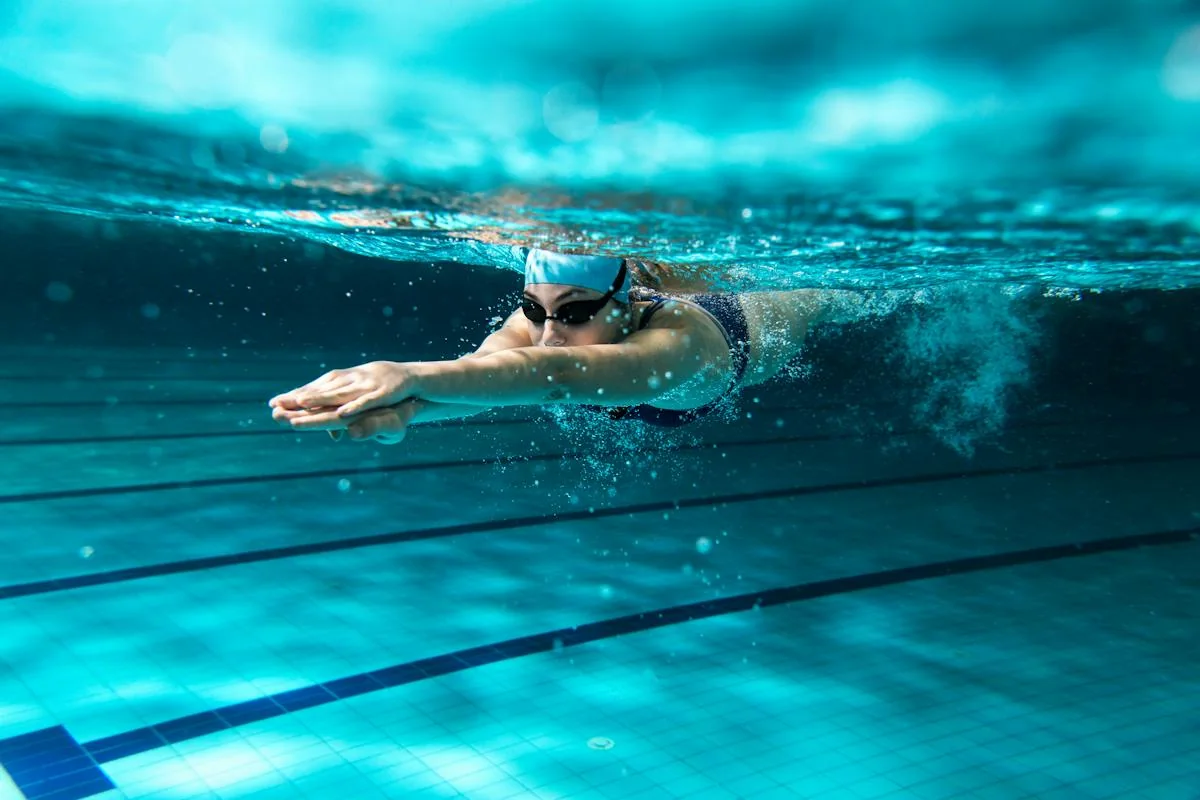
The first surprise in a pool may be how different a familiar movement feels. Water supports part of your weight, while also resisting the motion of your arms and legs. That combination can make swimming for joint pain appealing.
But the right activity depends on the joint, your skill, and your health.
You do not have to swim laps to begin. Standing exercises in shallow water can be a useful starting point for someone who is comfortable and safe in a pool.
Understand what water changes
Water can reduce the load placed on weight bearing joints and provide resistance during movement. This may make some exercises more comfortable than their land based versions. It does not guarantee pain relief, cure arthritis, or make every swimming stroke suitable for every knee, shoulder, neck, or back problem.
A person with sore knees might enjoy pool walking but find a forceful breaststroke kick uncomfortable. Someone with shoulder pain may tolerate standing leg work better than repeated overhead strokes.
Treat joint friendly activity as a personal fit, not a label that makes an exercise always safe. The movement, effort, water depth, and technique all matter.
If pain changes your movement or lingers afterward, reduce the challenge. A physical therapist or qualified aquatic instructor can help choose alternatives that fit your condition rather than expecting you to work through discomfort.
Begin with confidence before distance
Choose a supervised pool and an activity matched to your swimming ability. If you are not confident in the water, start with instruction or supported shallow water exercise. Use handrails when entering and leaving, and pay attention to slippery surfaces.
Pool safety is part of the exercise plan, not an afterthought.
Ask about accessible steps, lifts, changing areas, and water depth before your first visit. Removing uncertainty can make the session much less stressful.
For an initial visit, your aim might be learning the layout and spending a short time moving comfortably. There is no need to complete a set number of lengths.
Pool safety also means avoiding swimming alone and recognizing that flotation equipment does not replace appropriate supervision. If you have episodes of fainting, uncontrolled seizures, or other conditions affecting water safety, discuss suitable precautions with your care team.
Choose movements your joints tolerate
A gentle session can include walking through the water, controlled arm movements, and easy leg exercises near a support. Keep the range comfortable and avoid sudden twisting or forcing a painful position. If you swim, use a stroke and technique that do not increase symptoms during or after the session.
Try gentle movement before adding speed. Water resistance rises as you push harder, so a small increase in pace can noticeably increase effort.
A coach can review swimming technique if you lift your head awkwardly, strain your neck, or repeatedly overload a sore shoulder. Holding a position that looks easy from the pool deck can still be demanding.
Do not copy a vigorous class simply because other participants appear comfortable. An adapted class or an individual program may be a better fit, especially after injury or when several joints are painful.
Balance pool work with life on land
Water exercise can support fitness and confidence, but a complete plan may need strength, balance, and weight bearing activity on land. Swimming provides less bone loading than activities such as walking. Choose the mix with your care team when osteoporosis, falls, or significant weakness are part of your health picture.
Consider the tasks you want to make easier: climbing steps, carrying shopping, or standing from a chair. These goals help guide which land based activities belong beside pool sessions.
Water exercise can offer an enjoyable way to build activity when pain has made you hesitant. That confidence may help you return to other movement. But progress is not always linear.
Allow for the effort of traveling, changing, showering, and getting home. A pool visit that uses all your energy may need to be shorter or less frequent at first. Recovery belongs in the schedule too.
Watch symptoms instead of chasing exhaustion
A useful session leaves you able to recover and return; track pain, stiffness, fatigue, and daily function rather than judging success by exhaustion. Stop for dizziness, chest discomfort, or unusual breathlessness. New swelling, severe pain, or an unstable joint needs assessment, particularly after injury or when symptoms are worsening.
Ask your doctor whether wounds, infection, recent surgery, or a particular skin condition affects when you can enter a pool. Follow the facility's hygiene rules and avoid swimming when ill with diarrhea.
Drink as needed, because being surrounded by water does not remove fluid loss. Take breaks and leave the pool before fatigue makes getting out difficult.
Keep a brief note after each visit. Which movements felt comfortable? Did the joint settle afterward?
Those answers help build a plan around your response, with enjoyment and safety as useful measures of success.
Frequently Asked Questions
The best pool activity is the one you can perform safely and comfortably with a clear purpose. Swimming, water walking, and aquatic therapy are different options. Your diagnosis, skill, and access to support should guide the choice, especially when pain limits movement or you are returning after surgery or injury.
Is breaststroke best for painful knees?
Not necessarily, because its kick can bother some knees. Choose a comfortable alternative and ask for technique advice if symptoms increase.
Can I benefit without swimming laps?
Yes, shallow water walking and adapted exercises can provide useful activity. Stay within your ability and use appropriate supervision.
Will swimming replace osteoporosis treatment?
No, swimming does not replace prescribed treatment or a complete bone health plan. Discuss suitable weight bearing and strength activities with your doctor.