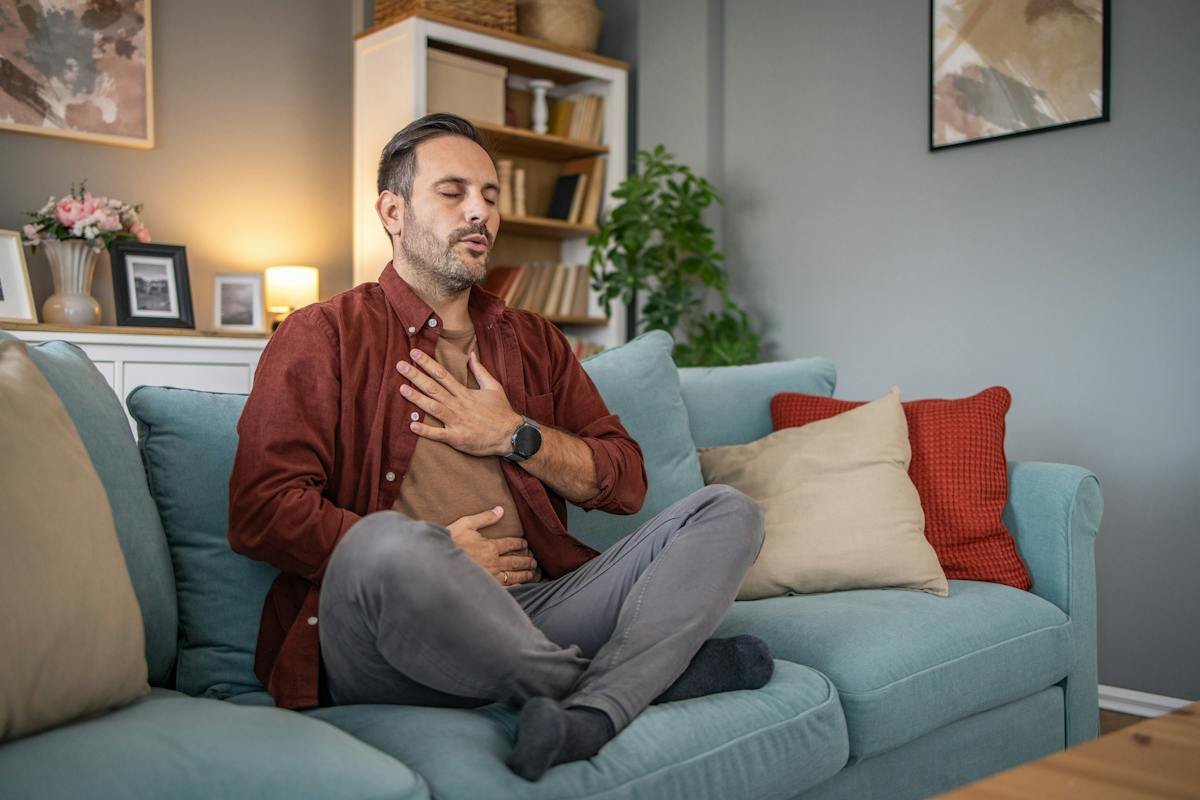
Your inbox has stopped moving. But your chest still feels busy. You catch yourself taking quick, shallow breaths while sitting in a quiet room.
Breathing exercises for stress can offer a small pause. They work best as gentle practice, not a test of how much air you can pull in.
Make the Breath Easier, Not Bigger
Slow breathing can help some people settle during stress, but forcing very deep breaths may feel unpleasant. Start with an easy breath and a relaxed exhale. Choose a seated position with support, loosen tight clothing, and let comfort matter more than following a strict count or pace.
Rest your hands where they feel natural. Notice air moving without trying to improve it at once. If counting helps, use a soft, steady rhythm that does not leave you hungry for air.
Breath awareness does not require a silent mind. You can notice a worried thought and return to the next breath. The practice is coming back, not stopping all thought for a set number of minutes.
Try a Short Practice While You Feel Safe
Begin when stress is mild rather than waiting for your worst moment. A brief, familiar practice may be easier to use later than a complicated method learned during panic. Keep your eyes open if that feels better, and stop if focusing on breathing makes you more distressed or dizzy.
Try one quiet minute between tasks. Sit back, soften your jaw, and let your shoulders settle. Breathe in without strain and let the air leave without a push.
Some people enjoy belly breathing, noticing gentle movement around the lower ribs and abdomen. Others prefer the feeling of their feet on the floor. You can choose an anchor that feels steadier without forcing one style.
Know What the Practice Can and Cannot Do
Relaxation methods may support stress relief. But they do not remove unsafe conditions, treat every anxiety disorder, or replace medical care. Research varies by method and health problem.
A relaxation response is one part of coping, not proof that a serious symptom has a harmless cause or can be ignored.
A breathing break will not fix an impossible workload. You may also need rest, practical help, boundaries, or professional care. Let a calming skill support those steps rather than become another demand you place on yourself.
If breathing practice becomes a rule you must perform perfectly, simplify it. You do not need a device, a special sound, or a record of each session to make a short pause worthwhile.
Leave Room for a Different Kind of Help
Seek urgent medical care for new severe breathing trouble, chest pain, fainting, or other alarming symptoms. Do not label them stress without check. For recurring anxiety, panic, or distress that limits life, a qualified professional can help you choose care that goes beyond a breathing exercise or phone app.
Tell a therapist if inward focus brings up difficult memories or makes you feel less grounded. Some methods do not suit everyone. Looking around the room, moving gently, or talking with someone may feel more helpful.
Choose one low-pressure cue for practice, such as closing your laptop at lunch. Keep the pause brief and comfortable. The aim is a tool you can use, not one more thing you can fail.
Frequently Asked Questions
There is no single breathing pattern that every person must follow to manage stress. Comfort, context. And your response matter more than a perfect count.
These questions can help you begin gently, while any new or worrying physical symptoms still deserve check rather than an assumption that anxiety caused them.
Must I hold my breath?
No, a breath hold is not required for a useful pause. Skip it if it causes strain, lightheadedness, or discomfort.
Why do deep breaths sometimes make me dizzy?
Breathing too fast or too forcefully can cause symptoms. Stop the exercise, return to natural breathing, and seek advice if dizziness persists or has no clear cause.
Can I use this instead of anxiety treatment?
Breathing can be one coping tool. But it is not a replacement for needed treatment. Discuss recurring or limiting symptoms with a qualified professional.