A painless lump can be easy to postpone. No ache, no fever, no clear reason to interrupt the week. Yet pain is not the test that decides whether a change needs attention.
A new testicular lump deserves a medical check, even if you feel well. Many causes are not cancer, but touch alone cannot with certainty tell them apart. The useful response is to act on the change without trying to name it yourself.
Know which symptoms cannot wait
Sudden, severe testicular pain needs emergency care, especially with swelling, nausea, or vomiting; one cause can be testicular torsion, when the blood supply twists. Time matters. Do not wait for pain to ease, try home care first, or book a routine visit later in the week for this pain.
Go to an emergency department or use local emergency services if that is the safest route. Tell the team when the pain began, even if it has eased.
A painful testicle is not always torsion. Infection, injury, and other problems can also cause symptoms. The point is that you cannot safely sort all of them out at home.
Fever with testicular pain or scrotal swelling also needs prompt care. Mention recent injury, urinary symptoms, or possible sexual exposure when asked.
Do not let embarrassment add hours to the wait. Doctors assess intimate symptoms as part of normal care. You can ask for privacy and an explanation of what will happen next.
Have a new lump checked even without pain
Tell a doctor soon about a new lump, swelling, or change in a testicle; causes can include cysts, fluid, enlarged veins, infection, or a tumor. A painless lump can still matter. How it feels, or a photo found online, cannot tell you the cause with enough certainty to skip care.
Body awareness means noticing a change from what is usual for you. One testicle may naturally hang lower or differ a little in size. A new difference still deserves a check.
Try to avoid repeated squeezing or comparing every few minutes. That can make the area sore without giving you a dependable answer.
When you call, say clearly that you found a new lump or swelling. Ask how soon you should be seen rather than booking it as a general check months away.
Our Men’s Health section covers related concerns. Reading can help you prepare, but it should not become a reason to delay an exam when something has changed.
Expect questions, an exam, and possibly a scan
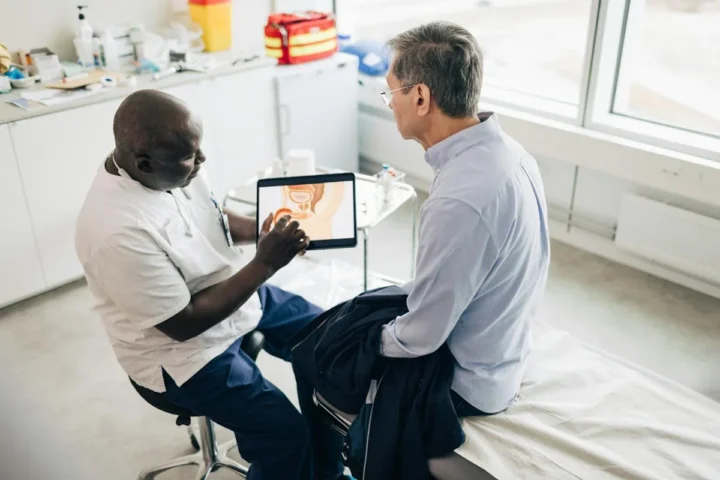
A doctor will ask when the change began, whether it hurts, and about injury or trouble passing urine; an exam helps find the area of concern. Testicular ultrasound may give a closer look. The findings guide any other tests; not every lump needs the same set of checks or care.
You do not need to know the exact name of the structure involved. Point to the area and explain what feels different. That is enough to start.
Ask for a chaperone if you would like one. You can also ask the doctor to explain each part of the exam before proceeding.
Bring a list of medicines and any relevant past surgery or testicular problems. Mention an undescended testicle or a previous tumor if that applies.
Before you leave, ask when scan results will arrive and who will contact you. If you do not receive the result as expected, follow up rather than assuming silence means everything is normal.
Keep follow up tied to the actual change
A first check can be reassuring, but a lump that stays, grows, or changes still needs follow up as advised. Follow the care plan rather than checking the lump over and over. Ask what the likely cause is, what could change the plan, and when to return for more help.
If the doctor thinks the cause is benign, ask whether any treatment or repeat check is needed. Some findings can be watched, while others need a specialist.
If symptoms return after treatment, contact the team. A new or ongoing concern deserves another look, even if the first visit felt reassuring.
Testicular changes can also raise questions about fertility. Our guide to male fertility testing explains a different type of assessment. A lump itself should be checked on its own timeline.
You do not need to make a prediction about cancer before seeking care. The purpose of the visit is to replace guessing with an exam, the right tests, and a clear next step that matches what is actually found.
Frequently Asked Questions
Lumps can raise fears about cancer and questions about what is normal; these answers help you decide the next step; have a new unexplained lump checked by a doctor. Get emergency care for sudden severe pain. Repeated self checks and online photos cannot replace those steps or show the cause.
Does a painless lump mean it is harmless?
No. Some harmless causes are painless, but so can testicular cancer be. Report a new lump promptly rather than using pain as the deciding factor.
Is one testicle hanging lower always a problem?
No, some difference is common. What matters is a new lump, swelling, pain, or other change from your usual pattern.
Should I wait to see if sudden pain goes away?
No. Sudden severe testicular pain can be time critical and needs emergency assessment. Seek care even if the pain starts to ease.
Sources and further reading: Santé Magazine — topic and image source, Medical reference 1.
For general information. This article does not replace personal medical care.