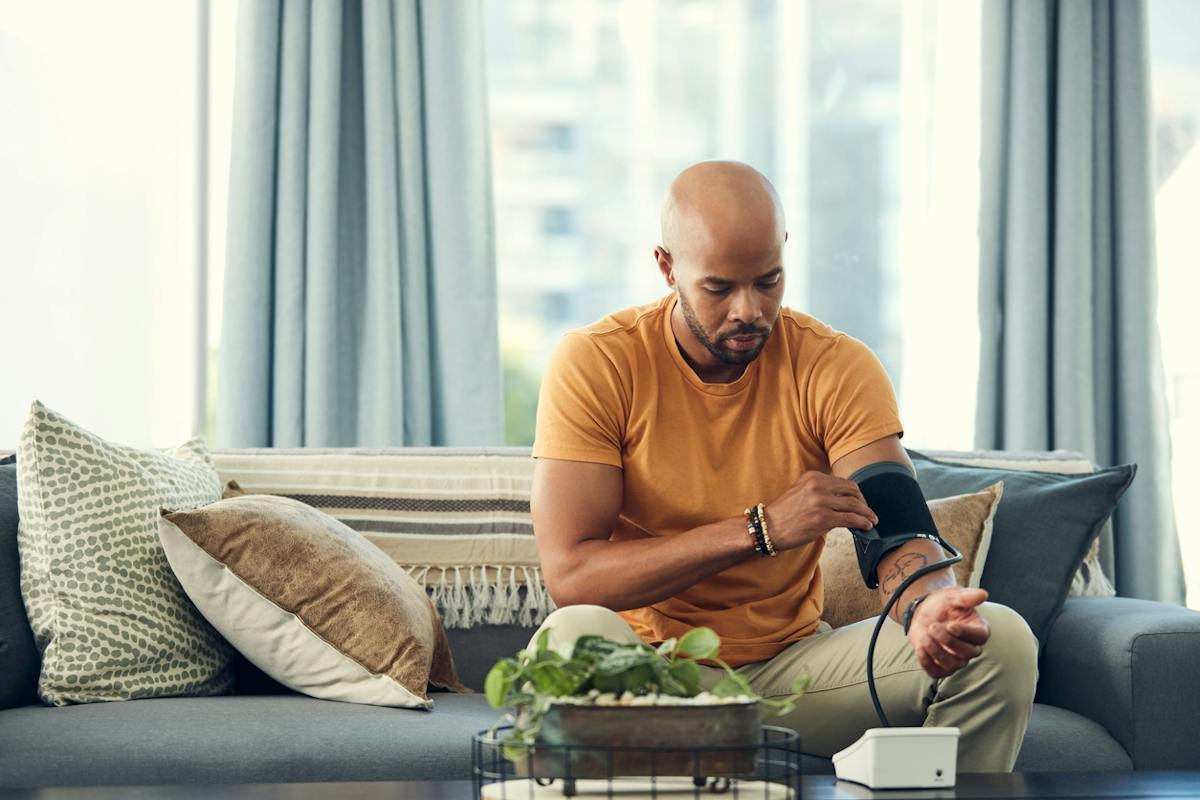
The cuff tightens, the screen lights up, and a number appears before you have even stopped talking. That result may reflect the setup as well as your pressure. Learning how to check blood pressure at home can make the record more useful and help you avoid reacting to a rushed, poorly timed reading.
Choose a Monitor That Fits the Job
Choose a validated automatic upper-arm monitor and a cuff that fits. Ask a professional to check your technique and bring the device to a visit. A poor fit can distort results.
Useful features matter less than a monitor you can place correctly and use the same way each time.
An upper-arm monitor is generally preferred over a wrist or finger device. Read the instructions and keep them nearby at first. If positioning is difficult, ask for a demonstration rather than improvising each time.
Measure your arm as directed when choosing the correct cuff size. Fit matters more than a long list of app features. A simple, suitable device can be more useful than a complicated one you struggle to place consistently.
Prepare Before You Press Start
Avoid smoking, caffeine, and exercise for thirty minutes, empty your bladder, then rest quietly for five minutes. Sit with back and arm supported and feet flat. Keep the cuff on bare skin at heart level.
Do not talk, check messages, or use your phone during the measurement itself.
Choose a chair and table that make the position easy to repeat. Put the device there before you need it. A calm setup removes the temptation to balance your arm in the air or squeeze a measurement between tasks.
A resting measurement is different from checking immediately after stairs or an argument. Ask your doctor when to measure in relation to medicines and daily activities. Follow that plan rather than changing the timing whenever you feel worried.
Record Both Readings Without Chasing a Perfect One
Take two readings one minute apart and record both, following your care team's schedule. A blood pressure log shows a pattern better than one number. Do not keep measuring until a preferred result appears.
That can make the record less clear and add worry instead of helping your care.
Write down the date, time, and any unusual circumstances. If the monitor stores readings, bring it to visits. Make sure the care team can see the actual record, not only the lowest numbers you remember.
Do not stop or increase medicine on your own because of a home result. Ask for a written action plan that explains your targets and when to call. That can turn a worrying number into a clear next step.
Know Which Results Need Urgent Action
Above 180 systolic or 120 diastolic without symptoms, recheck after at least one minute. Contact your doctor immediately if it stays high. With chest pain, breathing trouble, weakness, vision changes, or speech trouble, call 911 immediately.
Do not wait for the number to fall before seeking emergency help.
Serious symptoms can need urgent care even without a home measurement. Do not delay to find a cuff or complete a log. The device supports care; it does not decide whether an emergency is real.
For routine repeat readings, keep the agreed follow-up schedule. Ask how to send results and who will review them. A careful record is most useful when it leads to a conversation and a plan, not a growing stack of numbers no one sees.
Frequently Asked Questions
Home monitoring needs a suitable device, steady technique, and a plan for sharing results. One reading is a snapshot, not a full diagnosis. These answers cover common mistakes.
Urgent symptoms or very high readings still need prompt action, following the guidance above and any personal instructions from your care team.
Can I measure over my sleeve?
Place the cuff on bare skin as directed. Clothing under the cuff can affect fit and make the result less reliable.
Should I take only one reading?
Two readings one minute apart are commonly recommended. Follow your doctor's schedule and record both instead of selecting the one you like better.
Can good readings mean I can stop medicine?
Not on your own, since treatment may be why readings are controlled. Discuss any change with the doctor who manages your blood pressure.